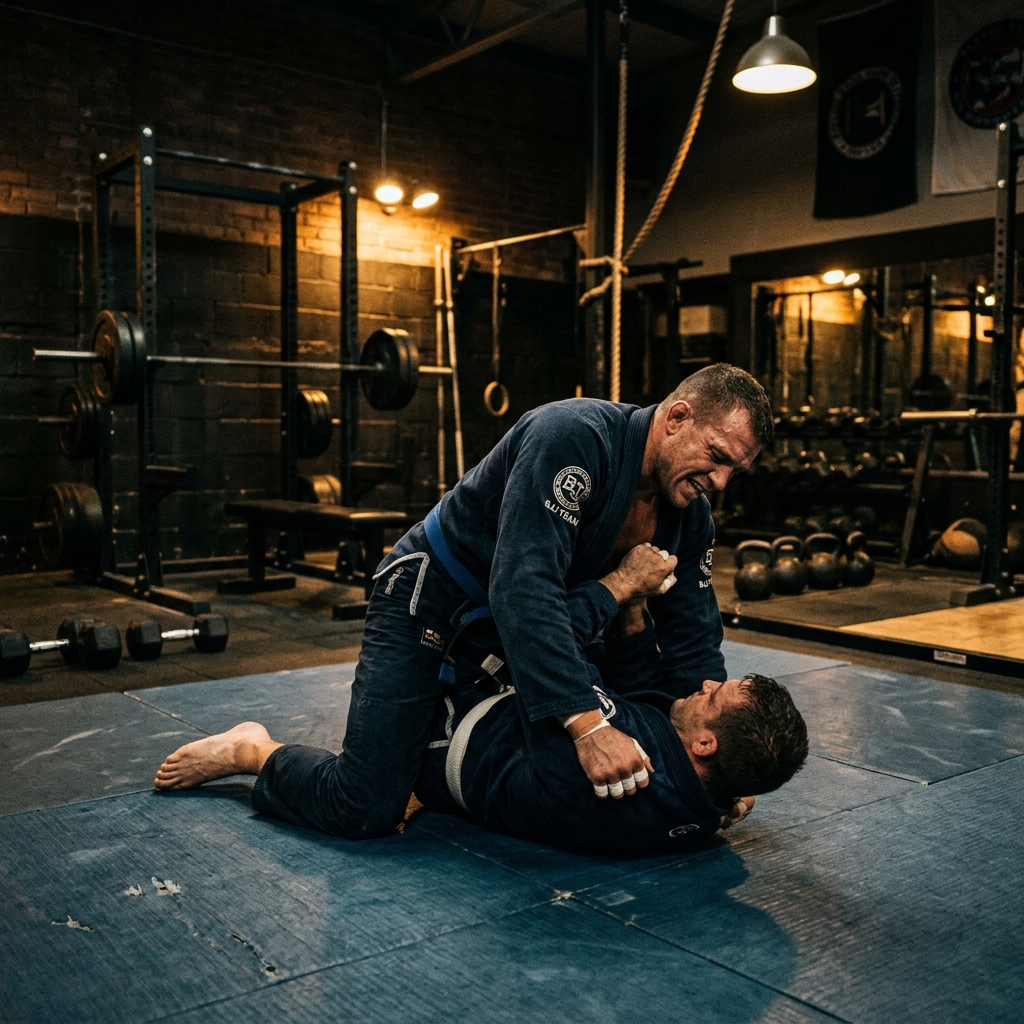
Brazilian Jiu-Jitsu has a complicated relationship with strength training. On one hand, the culture of BJJ emphasizes technique over strength — the idea that a smaller, skilled practitioner can defeat a larger, stronger opponent. On the other hand, when two grapplers of equal skill meet, the stronger one usually wins. And the research is clear: strength training improves grappling performance, reduces injury risk, and extends athletic careers.
The problem isn't whether to strength train — it's how to fit it in without compromising mat time and recovery. Most BJJ practitioners already train 4–6 days per week on the mats, and adding heavy squats and deadlifts on top of that can quickly lead to overtraining. This guide shows you how to do it right.
Why BJJ Athletes Need Strength Training
Let's start with the why, because if you don't fully buy into the importance of strength work, you'll never prioritize it consistently. The benefits for grapplers are both immediate and long-term:
- Injury prevention — Stronger muscles, tendons, and ligaments are more resistant to the twisting, pulling, and compressing forces of grappling
- Grip endurance — Deadlifts, rows, and farmer's walks build the grip strength that directly translates to collar and sleeve control
- Explosive power — Power cleans, squats, and plyometrics improve your takedown speed and hip escape explosiveness
- Postural strength — A strong back and core make it harder for opponents to break your posture and establish control
- Longevity — Resistance training preserves bone density, joint health, and muscle mass as you age. BJJ is a lifelong art — you need a body that can keep up
The strongest argument for strength training is what happens without it. BJJ practitioners who only grapple and never lift tend to develop muscular imbalances (overdeveloped pulling muscles, weak pressing muscles), chronic joint issues (especially shoulders and knees), and plateau in performance once they've reached the limits of their technical development.
Programming Principles: Less Is More
The biggest mistake BJJ athletes make with strength training is treating it like a bodybuilding program. You don't need 5-day splits with 20+ sets per muscle group. You need the minimum effective dose — enough stimulus to drive adaptation without stealing recovery resources from your mat work.
Here are the guiding principles for programming strength work around BJJ:
- Frequency: 2–3 strength sessions per week, maximum. Two is usually optimal for most recreational grapplers
- Duration: 45–60 minutes per session, including warm-up. Longer sessions add fatigue without proportional benefit
- Exercise selection: Prioritize compound movements. Squats, deadlifts, bench press, overhead press, rows, and pull-ups cover 90% of what you need
- Rep ranges: Keep primary lifts in the 3–6 rep range for strength. Accessories can go up to 8–12 reps
- Intensity management: Stay 1–2 reps from failure (RPE 7–8). Training to failure in the weight room when you have a grappling session the next day is a recipe for disaster
A Sample Weekly Schedule
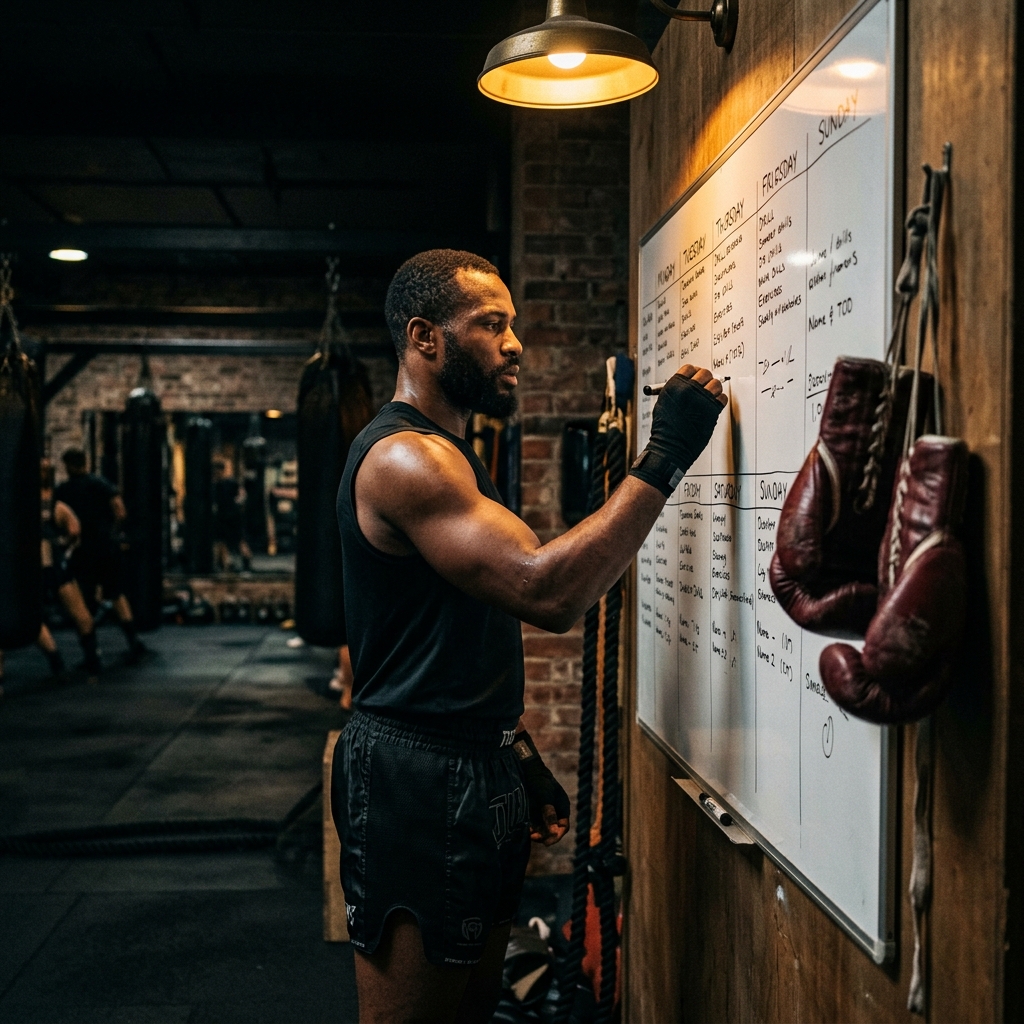
Here's a realistic template for a BJJ practitioner who trains 4–5 times per week on the mats and wants to add 2 strength sessions:
- Monday — BJJ (technique + drilling)
- Tuesday — Strength Session A: Squats 4×5, Bench Press 3×5, Barbell Rows 3×8, Core work
- Wednesday — BJJ (sparring / open mat)
- Thursday — REST or light mobility
- Friday — BJJ (technique + live rolling)
- Saturday — Strength Session B: Deadlifts 3×5, Overhead Press 3×5, Pull-ups 3×max, Farmer's Walks 3×30m
- Sunday — REST
Notice that strength sessions never fall on the same day as hard sparring. Tuesday's strength session follows a technical (lower intensity) BJJ day, and Saturday's strength session is followed by a full rest day. This arrangement maximizes recovery between demanding sessions.
If you train BJJ more than 5 times per week, reduce strength work to once per week — a full-body session hitting all major movement patterns. Something is always better than nothing, and one smart strength session per week is far better than three that leave you too fatigued to train your actual sport.
Exercise Selection for Grapplers
Not all exercises transfer equally to the mats. Here are the highest-value movements for BJJ athletes, grouped by the grappling quality they develop:
- Hip power (takedowns, sweeps, guard retention): Barbell back squats, trap bar deadlifts, hip thrusts, kettlebell swings
- Pulling strength (grips, collar ties, back control): Weighted pull-ups, pendlay rows, face pulls, farmer's walks
- Pressing strength (frames, bench escapes, guard pass pressure): Bench press, dips, overhead press, landmine press
- Core stability (positional control, anti-rotation): Pallof press, ab wheel, hanging leg raises, Turkish get-ups
- Grip endurance: Towel pull-ups, dead hangs, gi pull-ups, fat grip work
Managing Recovery Between Mats and Weights
Recovery is the most critical variable when combining BJJ and strength training. If you're not recovering, you're not adapting — you're just accumulating damage. Here's a recovery protocol that works for dual-sport athletes:
Sleep 7–9 hours per night without exception. Eat at least 1.8 grams of protein per kilogram of bodyweight daily. Consume enough total calories to support both training modalities — if you're losing weight unintentionally, you're under-eating. Do 10–15 minutes of mobility work daily (hip flexors, thoracic spine, and shoulders are priority areas for grapplers). Use contrast showers (alternating hot and cold) after intense sessions to promote blood flow and reduce inflammation.
Track your training volume across both BJJ and strength work using MaxGrind. When you can see your total weekly load — mat hours, sets, reps, and weights — you can make intelligent decisions about when to push and when to back off. The grapplers who train the longest and hardest aren't the ones who go all-out every day. They're the ones who manage their energy wisely, recover fully, and show up ready to learn session after session.